


9 Crown Row, Bracknell, Berkshire, RG12 0TH

9 Crown Row, Bracknell, Berkshire, RG12 0TH
62 High Street, Sunninghill, Ascot, Berkshire, SL5 9NN


Sales Valuer
Freya started her career in estate agency at the age of 18. Founding her love of property through her Dad who was a developer, she has gained many years experience selling and valuing properties across Berkshire, but having been born in Heatherwood Hospital, she has Ascot in her veins! Friendly and personable, Freya is passionate about helping clients and enjoys building new relationships. Away from work, she loves travelling with the family, pub gardens, shopping, and most importantly spending time with her dog, Dolly the Maltipoo!
One of my funniest memories is…
Swimming with pigs in the Bahamas.
You might be surpsied to know that…
Elton John has been my neighbour.
On Sunday mornings, you can usually find me…
Walking the dog around Ascot racecourse.
My guilty pleasures are…
Prosecco, Prosecco, Prosecco!
The thing I like best about my job is…
The people.
The best piece of advice I’ve been given is…
You come into this world with no money, and you go out this world with no money.
14 Aug 2018

All of us will be familiar with signs of condensation in the home, typically taking the form of little beads of water appearing on windows or on tiled walls. However, a great many will be unaware that condensation is in fact the most common cause of damp problems in the UK.
Our years of experience in the industry have taught us that people are often shocked to find that condensation can be to blame for a wide variety of property problems including off-putting damp patches appearing on walls, uninviting blistering or peeling wallpaper, and the appearance of potentially toxic and hazardous black mould.
The good news is that these problems can generally be prevented from ever occurring. Our guide provides you with some free, helpful and simple tips that will effectively reduce condensation levels in your home.
Since the source of condensation is the damp and humid air that we release into the property through unavoidable and essential daily activities such as bathing, cooking and drying clothes, our guide will look at ways we can reduce the impact of condensation from such activities.
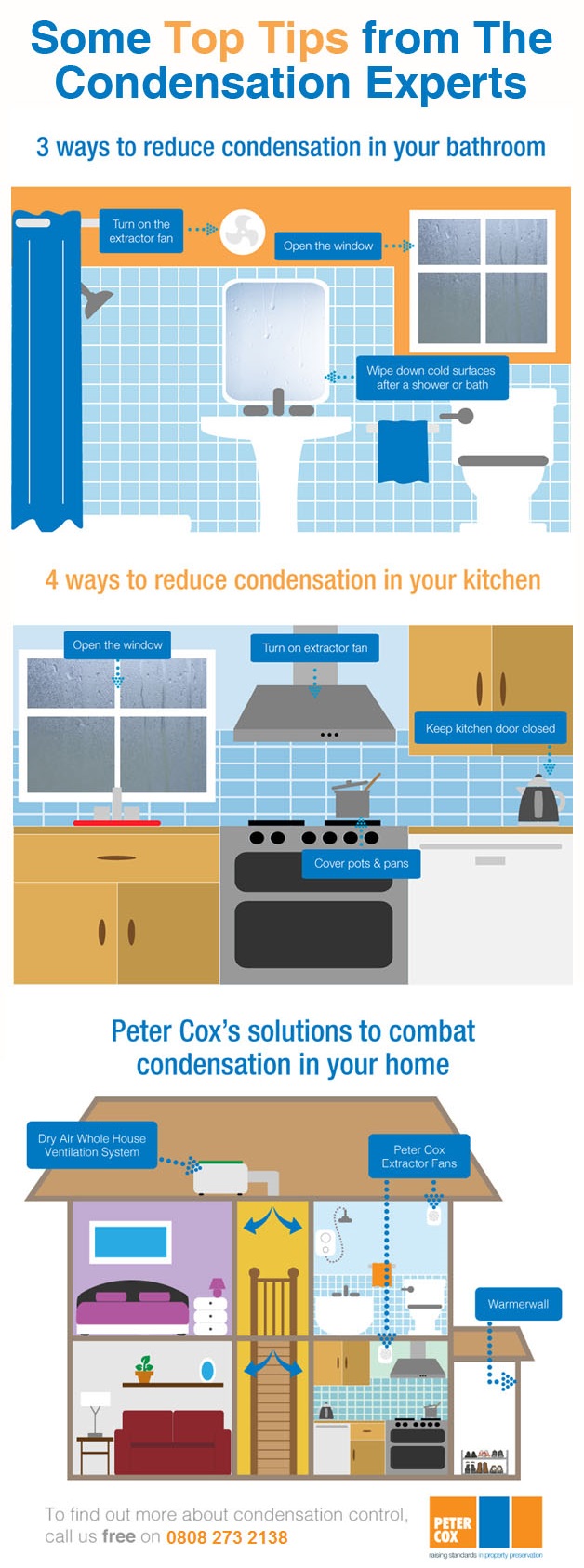
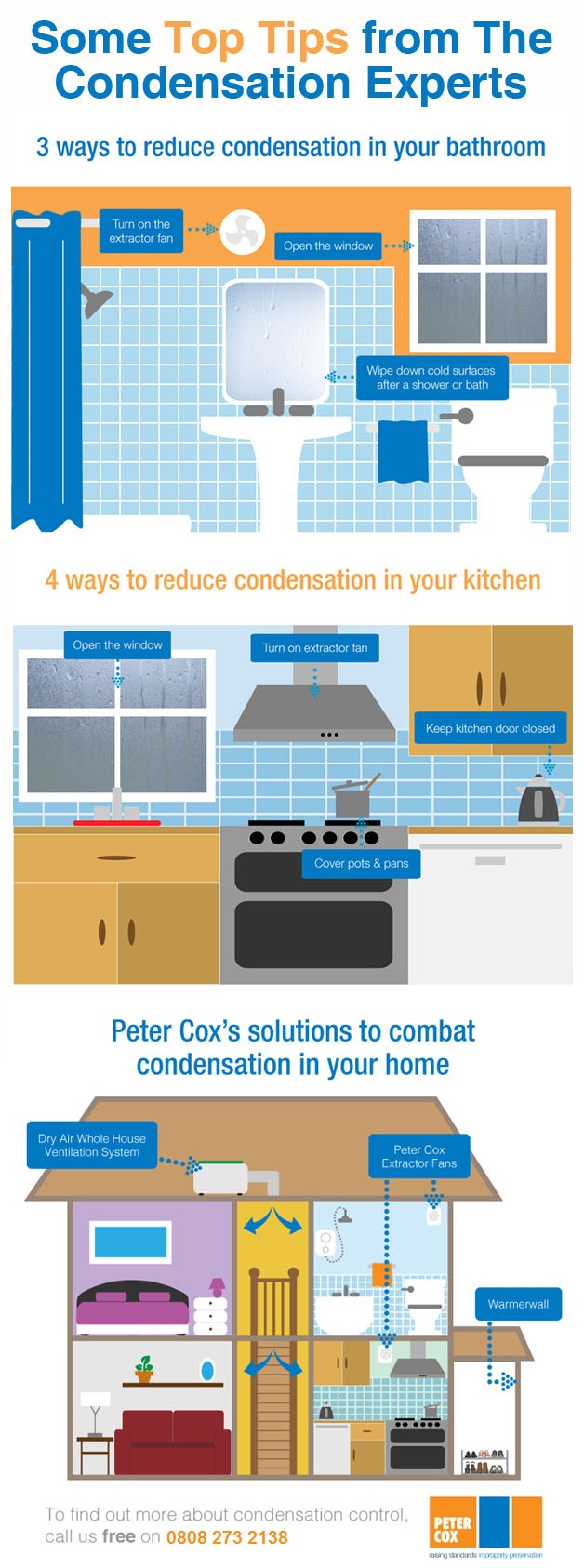
it is vital to introduce a source of ventilation in order to allow the damp and humid air the opportunity to escape outside of the building instead of settling on surfaces in the home. Usually the simplest source of ventilation is to open a window during any task that releases a lot of moisture into the air. Additionally it is sensible to leave the window open for around twenty minutes afterwards in order to allow the steam and moisture to clear.
In the colder months of the year we know it can be particularly unpleasant to have windows open for any length of time so make sure your extractor fan is functioning well in the Kitchen and Bathroom to remove steam and damp air.
Alongside proper ventilation there are a number of other ‘quick fixes’ you can take around the home to reduce condensation:
If you have tried all of the above measures and still find that your property is suffering from condensation and damp issues then you will probably want to consider professional condensation treatment options.
If you struggle to ventilate the property adequately then there are solutions such as our positive pressure whole house ventilation system. For problem hotspots like the Kitchen and Bathroom we have heat saving extractor fans, or if you only notice a problem on one particular wall or room then a coating of anti-condensation paint could get your home back to it’s fresh and dry best.
For more information on condensation treatment and solutions from the property preservation experts visit our page: https://www.petercox.com/our-services/condensation/solutions/






 General news
 General news
 General news